Nobody Converts Right
Plus more fiction on Substack, fun with frailty, and more

Creatures, when my friend Leah Libresco Sargeant talks about her conversion to Catholicism, she sometimes notes that focusing on the conversion story is a little bizarre. Like imagine (this is the analogy she’s used) that the Pevensie children come back from Narnia, and they start telling people about it—and everyone’s reaction is, “Oh sure, talking lion, mysterious lands, terrible betrayals and redemptions, I get it. Tell us more about the wardrobe!”
There’s been a rebound in adult conversions to Catholicism. This just seems to be true by now, as far as I can tell. Numbers are still not where they were a quarter-century ago, but they are up all over the USA and in many other countries. And there are all kinds of questions one could raise. Some of them are kind of banal: To what extent is this rise in adult conversions the result of delayed sacraments, like, how many of these people are from Catholic or Catholic-enough families who would’ve already had them baptized and Confirmed in an earlier era, and should this worry us? (Probably some are, and sure, we can worry about whatever.) Some of them are really important, and only a few places are asking: In France, for example, it does actually seem like people are coming to the Church as the result of a personal spiritual search, and not e.g. because they make you do it before you can have your wedding in the nice church.
But the question online-people seem to want to talk about, instead, is, “Are these people converting for the right reasons?” There’s a lot of Discourse about whether people are coming to the Catholic Church because it’s right-wing (? not the most obvious option here but okay), or because they want to be manly men (hmm), or because of Catholic “influencers” etc. To put the fear or criticism most charitably, it’s a fear that people are entering the Church for a political persona, not an encounter with Jesus Christ.
And yet I guess all of this seems to me like an obsession with the wardrobe. Nobody stays in the Faith for the same reasons they converted. The Church is bigger on the inside. Having entered, you may discover how much there really is, beyond the little alcove where you happened to find a door.
I came into the Church by one particular door. The people who brought me to Christ were mostly various stripes of political conservative. That meant that there were elements of the Church’s social teachings that they emphasized and elements they didn’t talk much about; there were imbalances, I think it’s fair to say, in the Faith as I was enculturated into it.
But like… what else is new? I was nineteen, they were 21 if that, we’ve all grown and changed, and most importantly for the point I’m making here, this is a universal experience of Catholic faith. All converts are brought into the Church by limited people in a limited community. Cradle Catholics, if they continue to practice their faith, rarely have the exact same faith they had as a child, because they were taught the Faith by limited people in a limited culture.
As we continue to live and seek God, we generally discover that there is something in the Faith that we weren’t taught at first and desperately need. (Sometimes we were taught it, but we didn’t pay attention because we didn’t realized we would desperately need it! To slightly modify the saying of the great sage bugl0rd, on Twitter,
‘why didn’t we learn this in CCD’
bitch we did but you were drawing a picture of an eye.
Anyways.)
So the real thing here is that when people enter the Church through small, weird, insufficient, or warped doors, they need wise guides to show them the path deeper in, into the heart of the Church. Those wise guides themselves rarely grasp the entire mystery (how could we?). Cradle Catholics, too, need these guides to grow in faith. All of us are called to move beyond where we started. And, not for nothing, all of us are called to not just react—not just say, “Oh, my parents’ faith or the faith I had when I converted was the bad thing, but now I have the true good thing!” You probably still don’t have all of the true good thing! Look, you’ve got a splinter in your eye right now!
…Wait, what’s this in my eye?
Islands in the ’Net
Onshore has been reading and reviewing short fiction published on Substack. Very cool, go and check it out. She included one of my Constance stories, “Mine Eyes Have Seen the Glory of the Burning of the School,” in her first roundup.
Of the other ones she picked, my favorite was “The Censor and His Writer,” which has a lot of tension (will the censor find a way to catch the politically-suspect writer out? Will the censor, perhaps, change? There is so much love in that punitive attention…) and also presses on the question of whether a story can really be “about” anything, have any meaning, in the absence of personal risk.
She called “Mine Eyes” a cyberpunk story, which is not at all something I intended! But I get it, I think, and it rings interestingly against the story’s origin. I conceived all of these Constance stories as the counterpoint to a story set in the “real world,” such as it is, and “Mine Eyes” matched to the IRL heroine’s teenage years. When I was that age cyberpunk was huge, I read a lot of it, and probably my sense of what those sex-obsessed, artsy, surreal and highly-symbolic years were like still smells of burning chrome.
Sticker Fun
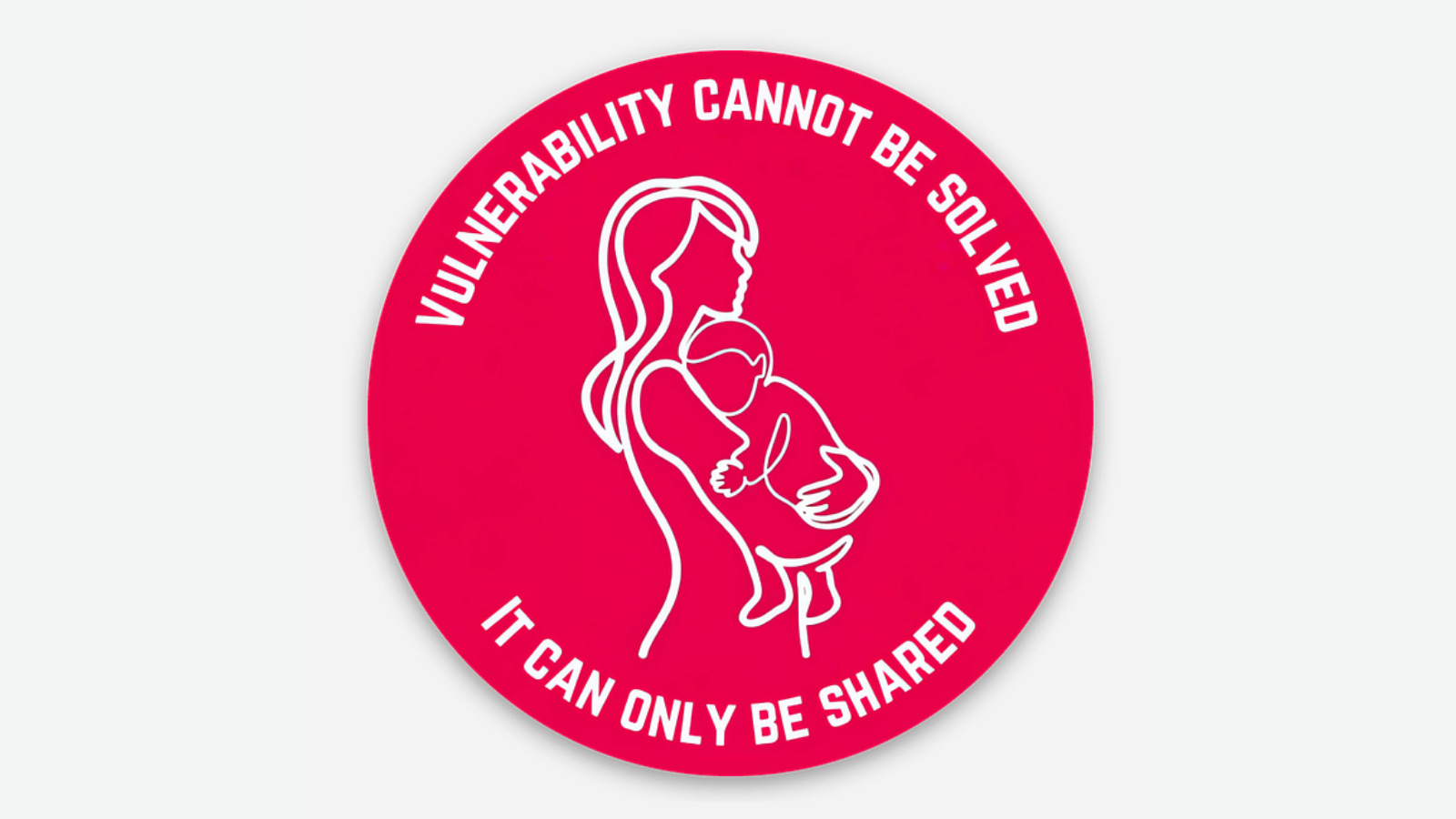
Speaking of Leah Libresco Sargeant, she’s running a Mother’s Day deal where you get free stickers if you buy any of her books, or her TTRPG!, for someone else. Tbh of her books my favorite is Arriving at Amen, a geeky guide to prayer for neophytes. I love it and it would be a great gift for one of those new Catholics we’ve been hearing so much about. Building the Benedict Option also has a lot of quite practical tips on building community—I’d really call it Hints from Hildegard, if we want a saint reference.
And “Back Again from the Broken Land,” the role-playing game, is a real blast. I’ve played it once. You’re returning from a great Tolkien-style adventure, you’ve defeated the great evil, but you still have to journey home through lands scarred by war—as your own heart is also scarred. It’s a game full of haunting imagery, and some cool mechanics that guide and foster imaginative and emotional storytelling. Strongly recommend.
The stickers have a stellar slogan (“Vulnerability Cannot Be Solved—It Can Only Be Shared”) and a lovely image, but they are extremely pink and, like, femme. In general I am not convinced The Dignity of Dependence, Sargeant’s recent book, really managed the argument, “To be human is to be vulnerable and dependent often—women are vulnerable and dependent more obviously or inescapably than men—therefore dependence is a feminist issue—also some other things about sexism in design and medicine.” But if you are down for a very very feminine sticker that imagines care-in-general through maternity, this is a great one.
Gotta give me some credit for mortifying my pride as a girl who grew up never wearing pink for ideological reasons ;)
Catholicism: a beautiful mess 💜